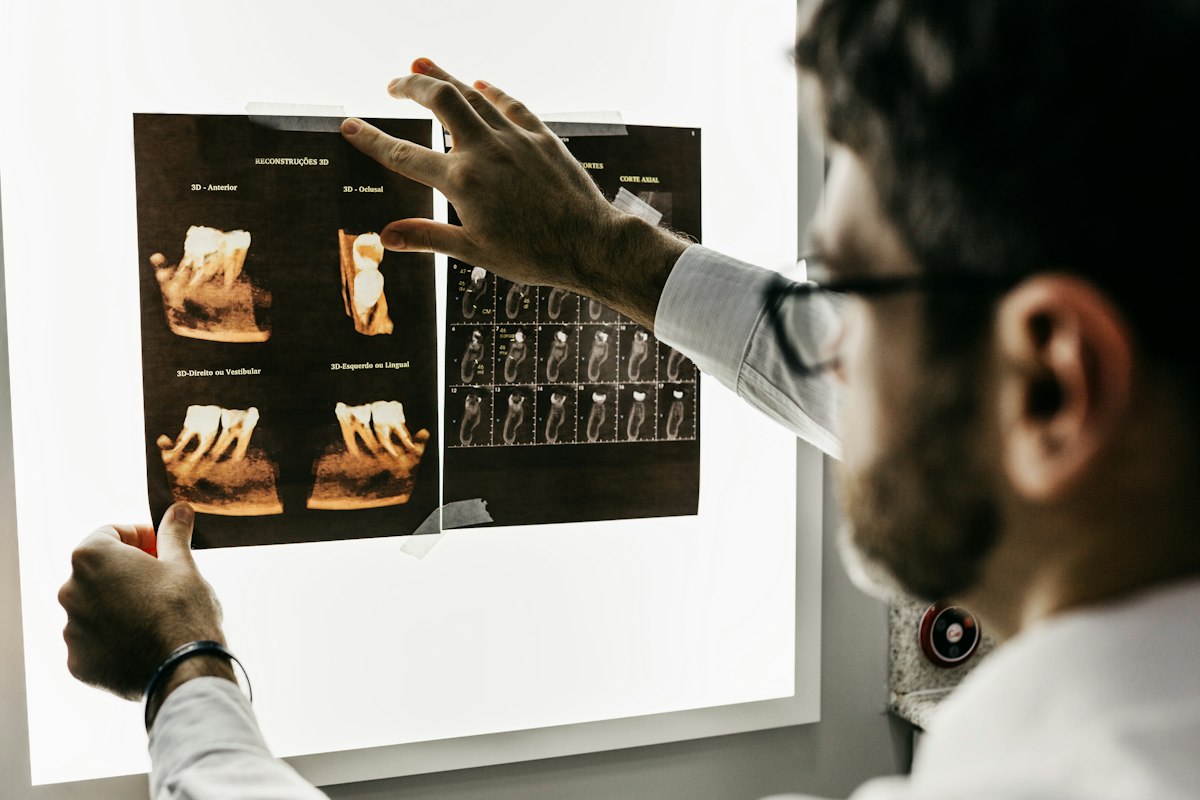

You visit your dentist twice a year for cleanings and checkups. During those appointments, your dentist examines your teeth, gums, tongue, soft palate, and throat — every structure involved in the upper airway that collapses during obstructive sleep apnea. No other healthcare professional sees your airway anatomy this frequently or this closely. Yet for decades, dental visits focused exclusively on cavities, gum disease, and cosmetic concerns. That is changing rapidly. In 2026, the airway dentistry movement has gained enough momentum that dental sleep apnea screening is becoming a standard part of routine oral examinations — and the implications for the estimated 80 percent of sleep apnea cases that remain undiagnosed are enormous.
What Your Dentist Can See That You Cannot
Every time your dentist asks you to open wide, they are looking at the structures that determine your snoring risk. Most patients have no idea that a routine oral exam reveals specific anatomical markers strongly associated with obstructive sleep apnea. Here is what a trained dentist evaluates.
The Mallampati score is a visual classification of how much of the throat is visible when you open your mouth and stick out your tongue. Scored from Class I (full visibility of tonsils, uvula, and soft palate) to Class IV (only hard palate visible, with the soft palate and uvula completely obscured by the tongue base), the Mallampati score is a well-established predictor of OSA risk. Higher scores indicate a more crowded airway and greater likelihood of obstruction during sleep. Your dentist can assess this in seconds during any exam.
Scalloped tongue borders are indentations along the lateral edges of the tongue caused by the tongue pressing against the teeth. This pattern indicates that the tongue is too large for the oral cavity — a condition called relative macroglossia — which is a significant risk factor for airway obstruction during sleep. The tongue falls backward when muscle tone decreases in sleep, and an oversized tongue is more likely to block the airway.
Tooth grinding (bruxism) leaves characteristic wear patterns that dentists identify routinely. Bruxism has a strong bidirectional relationship with sleep-disordered breathing. The jaw clenching and grinding may represent the body's attempt to maintain airway patency during sleep by tensing the muscles that support the jaw and tongue. When your dentist notices worn-down tooth surfaces, they should be asking about your sleep quality and snoring history. Understanding the connection between snoring and dental health puts these findings in context.
A narrow or high-arched palate reduces the volume of the nasal and oral airway, increasing resistance to airflow. Dentists can identify palatal morphology instantly. A V-shaped or gothic palate — often the result of chronic mouth breathing during childhood development — is both a contributor to adult snoring and a clue that the patient may have been dealing with airway issues for decades.
Enlarged tonsils and visible tonsillar tissue are observable during a standard oral exam. While tonsil enlargement is more commonly associated with pediatric sleep apnea, many adults retain tonsillar tissue that contributes to airway narrowing, particularly when combined with other anatomical risk factors.
Retrognathia — a lower jaw that is set back relative to the upper jaw — is clearly visible in a dental assessment. A recessed mandible reduces the anteroposterior dimension of the pharyngeal airway, creating the anatomical predisposition for the soft tissues to collapse during sleep. This is precisely the condition that mandibular advancement devices are designed to correct.
The AADSM Push for Universal Screening
The American Academy of Dental Sleep Medicine (AADSM) has been advocating for dentists to incorporate sleep apnea screening into routine practice for several years, and the effort has accelerated in 2026. The AADSM's position is straightforward: dentists see patients more frequently than most physicians, they directly observe the relevant anatomy, and they can deliver one of the primary treatments (oral appliance therapy). Excluding them from the screening and treatment pathway is a missed opportunity to catch the millions of undiagnosed OSA cases that slip through the medical system.
The American Dental Association (ADA) has also issued policy statements supporting the role of dentists in screening for sleep-related breathing disorders. While the ADA emphasizes that diagnosis must come from a physician or sleep specialist, it recognizes that dentists are ideally positioned to identify patients who should be referred for formal evaluation.
In practical terms, this means that a growing number of dental practices are adding validated screening questionnaires — such as the STOP-Bang or Epworth Sleepiness Scale — to their new patient intake forms. Some practices have integrated pulse oximetry into hygiene appointments, recording a quick baseline oxygen reading that can flag patients with unexpectedly low daytime levels. Others use intraoral cameras and 3D imaging to document airway anatomy as part of the clinical record.
The result is that your dental checkup in 2026 may include questions about snoring, daytime sleepiness, and witnessed breathing pauses that your dentist would not have asked five years ago. This is a positive development. The more professionals who are trained to recognize sleep-disordered breathing, the more undiagnosed cases will be identified and treated.
How Dental Sleep Medicine Works
When a dentist identifies signs suggestive of sleep apnea, the standard pathway involves referral to a sleep physician for formal diagnosis through polysomnography or a home sleep test. Once OSA is confirmed and its severity classified, the sleep physician and dentist collaborate on treatment planning.
For mild-to-moderate OSA, and for patients who cannot tolerate CPAP therapy, oral appliance therapy (OAT) is a recognized treatment option supported by clinical practice guidelines from both the AASM and the AADSM. The Sleep Foundation provides a comprehensive overview of how these devices function and their evidence base.
A dentist trained in dental sleep medicine fabricates a custom oral appliance based on dental impressions or digital scans. The device fits over the upper and lower teeth and uses mechanical linkages to hold the lower jaw in a forward position during sleep. This mandibular advancement increases the caliber of the pharyngeal airway, reduces tissue vibration, and prevents the tongue base from falling backward into the airway.
The fitting process typically involves several appointments: initial impressions, device delivery, and one or more titration visits where the dentist incrementally adjusts the degree of jaw advancement to optimize efficacy while minimizing side effects. Follow-up sleep testing confirms that the appliance is adequately controlling apnea events and maintaining oxygen levels. Exploring the decision between custom dental devices and OTC options helps patients understand which approach fits their situation.
Custom Oral Appliances: Costs and Considerations
Custom dental oral appliances represent the gold standard of mandibular advancement therapy. They are precisely fitted to the individual patient's dental anatomy, offer adjustable titration mechanisms, and are fabricated from durable medical-grade materials designed for years of nightly use.
The cost reflects this precision. A custom oral appliance from a dental sleep medicine specialist typically runs $1,500 to $3,000, which includes the device fabrication, fitting appointments, titration adjustments, and initial follow-up testing. Some insurance plans cover a portion of this cost for patients with a formal OSA diagnosis, particularly when CPAP has been tried and failed. Medicare and many commercial plans have established coverage pathways for oral appliance therapy.
The advantages of custom devices include superior fit and comfort, adjustable advancement that allows precise titration, durable construction that lasts three to five years or more, and the oversight of a trained clinician who monitors your dental health and treatment efficacy over time. Side effects can include temporary jaw stiffness, bite changes with long-term use, and tooth movement, all of which a dental sleep specialist can manage proactively.
The primary limitations are cost, access (not all areas have dental sleep medicine specialists), and the multi-appointment process that can stretch weeks from initial consultation to receiving a functional device. For people who need relief now, the timeline can feel frustratingly slow. If you are considering transitioning from CPAP to an oral appliance, understanding the process timeline helps set expectations.
OTC Mouthpieces: The Accessible Alternative
Over-the-counter anti-snoring mouthpieces operate on the same mandibular advancement principle as custom dental devices. They advance the lower jaw forward, increase pharyngeal airway volume, and reduce the tissue vibration that causes snoring. The mechanical action is fundamentally the same.
The differences lie in customization and cost. OTC devices typically use a boil-and-bite or thermal-fit process that allows the user to create a semi-custom impression at home, rather than requiring professional dental impressions and laboratory fabrication. The fit is less precise than a custom device, and the adjustment mechanism is simpler. But the price point is dramatically different: Snorple, at $59.95, delivers dual mandibular advancement and tongue stabilization technology at a fraction of the custom device cost.
For people whose primary issue is snoring without diagnosed severe OSA, an OTC mouthpiece is often the most practical first step. It provides immediate relief on the first night, requires no appointments or waiting, and offers a low-risk way to determine whether mandibular advancement addresses the problem before committing to the expense and time investment of a custom device. The landscape of FDA-cleared snoring devices includes both prescription and OTC options across a range of price points.
What to Ask Your Dentist About Sleep Apnea
At your next dental appointment, consider raising the topic proactively. Many dentists are trained to screen for sleep-disordered breathing but may not initiate the conversation unless you bring it up. Here are specific questions that can open a productive dialogue.
“Based on my oral anatomy, do you see any signs of airway obstruction risk?” This invites your dentist to assess your Mallampati score, palate shape, tongue size, and jaw position in the context of sleep-disordered breathing. Even dentists who are not sleep specialists can identify obvious anatomical risk factors.
“Could my tooth grinding be related to sleep apnea?” If your dentist has noted bruxism, this question connects the dental finding to its potential sleep-related cause. Many patients wear nightguards for bruxism without ever being evaluated for the underlying sleep disorder that may be driving it.
“Do you offer sleep apnea screening or work with sleep specialists?” This helps you understand whether your dental practice has integrated sleep screening into its workflow and whether they can refer you to appropriate specialists for diagnosis.
“Would an oral appliance be appropriate for my situation?” If you already suspect or have been diagnosed with mild-to-moderate sleep apnea or snoring, this question opens the discussion about whether your dentist provides oral appliance therapy or can refer you to a colleague who does.
Working with a sleep-aware dentist complements working with sleep coaches and other providers to address your complete sleep health picture. No single professional has the full picture, and the best outcomes come from coordinated care.
The Bigger Picture: Airway-Centered Dentistry
The movement toward dental sleep apnea screening is part of a broader paradigm shift in dentistry from a teeth-focused discipline to an airway-centered one. Proponents of airway dentistry argue that the mouth is not just a collection of teeth to be maintained — it is the gateway to the respiratory system, and dental professionals have a responsibility to evaluate the entire functional unit.
This perspective is reshaping dental education. More dental schools are incorporating sleep medicine modules into their curricula. Continuing education courses in dental sleep medicine are among the fastest-growing categories in professional dental education. The AADSM's diplomate certification program has seen record enrollment in recent years, reflecting growing professional interest and patient demand.
For patients, the practical benefit is that your dentist is increasingly likely to spot signs of sleep-disordered breathing that might otherwise go undetected for years. Given that undiagnosed OSA is associated with elevated risk of hypertension, heart disease, stroke, diabetes, and cognitive decline, early identification through dental screening has the potential to prevent serious downstream health consequences. A comprehensive approach to stopping snoring starts with knowing the problem exists.
The Bottom Line on Why Your Dentist Should Screen
Your dentist looks at your airway more often than any other healthcare provider. In 2026, a growing number of dental professionals are using that privileged access to screen for obstructive sleep apnea — a condition that affects an estimated one billion people globally, with the vast majority undiagnosed. The signs are visible in a routine oral exam: a crowded airway, a scalloped tongue, worn-down teeth from grinding, a narrow palate, a recessed jaw.
If your dentist identifies risk factors, the next step is formal evaluation by a sleep specialist. If OSA or primary snoring is confirmed, treatment options range from custom oral appliances ($1,500–$3,000) to effective OTC mouthpieces ($59.95) that use the same mandibular advancement principle at a fraction of the cost. The key is to move from identification to treatment without unnecessary delay. Every night of untreated airway obstruction adds to the cumulative health burden.
At your next checkup, ask your dentist about your airway. The answer might change your sleep, your health, and your life.
Clinically Proven to Reduce Snoring — Same Principle, Fraction of the Price
Custom dental oral appliances cost $1,500–$3,000. Snorple uses the same mandibular advancement mechanism in a $59.95 device you can use tonight. Dual MAD + TSD technology, no dental appointments required. 100-night money-back guarantee.
Try Snorple Tonight — $59.95 →Recommended Reading
- How Mandibular Advancement Works — The biomechanics behind jaw-repositioning devices
- Custom Dental Device vs. OTC — A detailed comparison to help you decide
- Snoring and Dental Health — How sleep-disordered breathing damages teeth and gums
- FDA-Cleared Snoring Devices — Devices that meet regulatory safety standards
- Switching from CPAP to Oral Appliance — A practical guide for the transition in 2026
- Adult Sleep Coaching in 2026 — What behavioral coaching can and cannot do for snoring