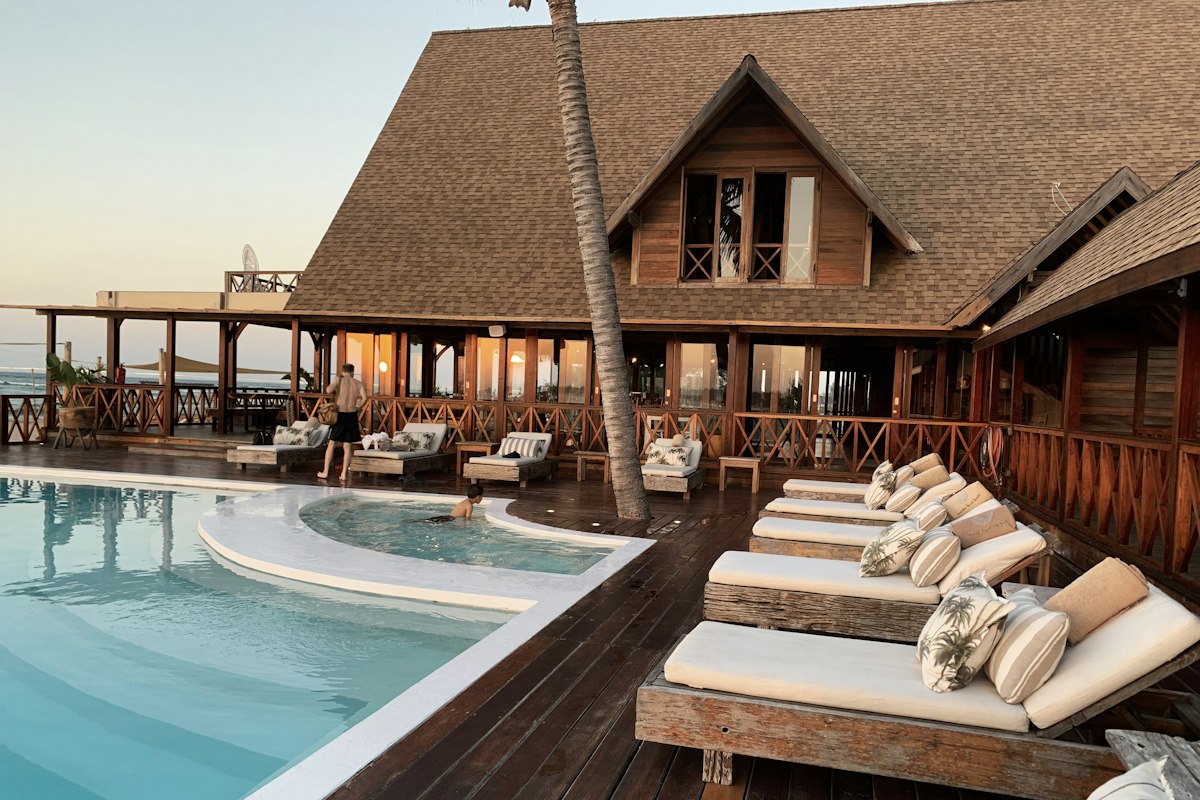

Somewhere right now, a person who snores badly enough to exile their partner to the guest room is booking a $2,400-per-night sleep retreat in Santorini, convinced that a combination of organic lavender pillow mist, a sleep concierge, and a mattress that costs more than a used car will finally solve their problem. The sleep tourism industry — valued at an estimated $690 billion globally according to Grand View Research — is more than happy to take their money.
Sleep tourism, or "sleepcations," represents one of the fastest-growing segments of the wellness travel market. One in five leisure travelers now considers sleep quality a primary factor in destination selection. The average sleep-focused trip costs $1,725 per person. Hotels from Tokyo to Tulum are investing millions in sleep suites, circadian lighting systems, and in-house sleep coaches. And the marketing is seductive: the promise that the right environment, the right ritual, and the right thread count will transform your sleep.
There is just one problem. If you snore because your airway collapses during sleep — which is the case for the vast majority of habitual snorers — no hotel room on earth can fix that. You will snore on a $5,000 mattress exactly as loudly as you snore on a $500 one. And when you fly home from your sleepcation, the snoring comes with you.
What Sleep Tourism Actually Offers
To be fair to the sleep tourism industry, many of these programs do address genuine sleep hygiene factors. The best sleep retreats incorporate evidence-based elements that can meaningfully improve sleep quality for people whose poor sleep stems from environmental or behavioral causes. Here is what a typical high-end sleep program includes:
Environmental optimization. Blackout curtains that achieve true darkness. Temperature control systems maintaining the ideal 65-68 degrees Fahrenheit range. White noise or pink noise generators calibrated to mask ambient sound. Humidity systems that keep air moisture between 30 and 50 percent. Hypoallergenic bedding to reduce nighttime congestion. These are all legitimate sleep environment improvements that research supports.
Sleep concierge services. A growing number of luxury hotels employ dedicated sleep concierges who conduct intake assessments, customize room settings, provide pillow menus (often with 10+ options), and schedule bedtime routines including herbal tea service and guided breathing exercises. Some properties partner with sleep medicine physicians who offer virtual consultations as part of the package.
Technology integration. Sleep-focused hotel rooms increasingly feature smart mattresses with adjustable firmness zones, circadian lighting that automatically shifts from blue-enriched to amber tones throughout the day, and sleep tracking systems embedded in the mattress or pillow that generate morning reports on sleep stages, heart rate, and respiratory patterns.
Wellness programming. Yoga, meditation, sound baths, float tanks, thermal cycling (alternating between saunas and cold plunge pools), and nutrition counseling focused on sleep-promoting foods. Some retreats offer multi-day programs that combine all of these elements into structured sleep improvement protocols. For a comprehensive look at sleep habits that actually work, see our complete sleep hygiene guide.
The Top Sleep Tourism Destinations
The sleep tourism trend has spawned dedicated programs at luxury properties around the world. As National Geographic has documented, several destinations have emerged as global leaders in the sleepcation movement:
Kyoto, Japan. Traditional ryokan inns have capitalized on the global interest in Japanese sleep culture, offering tatami-floored rooms with futon sleeping systems, onsen (hot spring) bathing before bed, and forest bathing excursions designed to reduce cortisol levels. Sleep-focused ryokan packages typically run $800 to $1,500 per night.
Santorini, Greece. Several luxury hotels in Oia and Fira now offer "sleep suites" carved into the volcanic caldera, where natural thermal mass keeps room temperatures stable and thick stone walls eliminate external noise. Packages include sleep-focused Mediterranean dining (tryptophan-rich meals timed to circadian rhythms) and sunset meditation sessions. Rates range from $1,200 to $3,000 per night.
Big Sur, California. Retreat centers along the coast offer multi-day sleep immersion programs that combine cognitive behavioral therapy for insomnia (CBT-I), guided nature walks, digital detox protocols, and sound healing sessions. Programs typically cost $3,000 to $6,000 for a three-to-five-night stay.
Swiss Alps. Several Swiss wellness hotels have developed clinical sleep programs that include on-site polysomnography, physician consultations, and altitude-optimized sleep chambers. These medical-grade programs can cost $5,000 to $15,000 for a week-long stay.
The Price Comparison That Changes the Conversation
When you line up the costs of sleep tourism against solutions that actually address the mechanical cause of snoring, the numbers speak for themselves. As Marketplace has reported, the wellness travel industry thrives on the gap between what people want (better sleep) and what they actually need (treatment for the specific condition disrupting their sleep).
| Solution | Cost | Fixes Snoring? | Lasts |
|---|---|---|---|
| Luxury sleepcation (3 nights) | $5,175+ | No | 3 nights |
| Swiss sleep clinic retreat | $10,000+ | Diagnoses, but does not treat | 7 nights |
| Weighted blanket | $150-$300 | No | Ongoing |
| Premium mattress | $2,000-$5,000 | No | 8-10 years |
| Sleep coaching program | $500-$2,000 | No (behavioral only) | 6-8 weeks |
| Snorple mouthpiece | $59.95 | Yes | 6-12 months |
| Snorple Complete System | $69.95 | Yes | 6-12 months |
The math is stark. The cost of a single luxury sleepcation could purchase 75 Snorple mouthpieces. More importantly, the mouthpiece addresses the actual anatomical cause of snoring — airway obstruction — while even the most expensive sleep retreat does not.
Why a Perfect Sleep Environment Cannot Fix a Collapsed Airway
The fundamental disconnect in sleep tourism for snorers is the mismatch between what these programs treat and what causes snoring. Sleep retreats optimize the external environment: light, temperature, sound, comfort, and stress levels. Snoring is caused by an internal mechanical problem: the tissues of the upper airway — the soft palate, uvula, tongue base, and pharyngeal walls — collapse inward during sleep, partially or fully obstructing the flow of air.
No amount of environmental optimization changes the diameter of your airway. A perfectly dark, perfectly cool, perfectly quiet room with an organic buckwheat pillow and a lavender-infused silk eye mask will not prevent your tongue from falling backward or your soft palate from vibrating. These are anatomical and neuromuscular events that occur regardless of your sleep setting.
This is analogous to treating a broken leg with a more comfortable chair. The chair may improve your overall experience, but it does nothing to address the fracture. Similarly, a sleep retreat may reduce your cortisol levels, improve your sleep onset latency, and help you establish better pre-sleep routines — all of which are genuinely valuable — but none of which will stop the mechanical obstruction that produces snoring. The embarrassment of snoring while traveling is a real concern, but the solution fits in your carry-on luggage.
What Sleep Tourism Gets Right (And What to Bring Home)
Despite the inability of sleep retreats to fix snoring, several elements of sleep tourism programs have genuine, evidence-based value that can be incorporated into your home environment at a fraction of the cost:
Temperature control matters. The optimal sleep temperature range of 65-68 degrees Fahrenheit is well established in sleep science. If your bedroom is warmer than this, a simple adjustment to your thermostat or the addition of a cooling mattress pad ($50-$200) can meaningfully improve sleep quality.
Light management is critical. Blackout curtains ($30-$80) replicate the darkness achieved in luxury sleep suites. Eliminating blue light exposure for 60-90 minutes before bed (by using amber-tinted glasses or enabling night mode on devices) supports natural melatonin production.
Consistent routines work. The structured bedtime protocols offered by sleep concierges — consistent sleep and wake times, wind-down rituals, avoidance of stimulating activities before bed — are among the most effective behavioral interventions for insomnia. These routines cost nothing to implement at home. Some people benefit from working with a sleep coach to establish these habits, though the core principles are straightforward.
Digital detox has real benefits. The device-free protocols at sleep retreats align with research showing that pre-sleep screen use delays sleep onset and reduces sleep quality. Implementing a "devices off 90 minutes before bed" rule at home provides the same benefit. Watch out for viral sleep trends on social media that claim to cure snoring but lack evidence.
The $59.95 Carry-On Solution
Here is the irony that the sleep tourism industry would prefer you not consider: the single most effective thing a snorer can bring on any trip — whether to a $3,000-per-night Santorini sleep suite or a $89 airport hotel — is a mandibular advancement mouthpiece that weighs a few ounces, fits in a travel case, and costs $69.
A mouthpiece works by repositioning the lower jaw slightly forward, which pulls the tongue base away from the posterior airway wall and increases the cross-sectional area of the pharynx. This addresses the mechanical cause of snoring directly, regardless of the room temperature, the thread count, or whether the pillow contains organic buckwheat or synthetic polyester. It is the ideal anti-snoring solution for travel because it goes where you go.
The Snorple mouthpiece adds tongue stabilization to jaw advancement, providing dual-mechanism airway support in a single device. It requires no electricity, no water, no special sleeping position, and no sleep concierge. It works in a ryokan in Kyoto, a cave hotel in Santorini, a tent in Big Sur, and your bedroom at home.
When to Invest in Sleep Environment vs. Snoring Treatment
The decision framework is straightforward. If your primary sleep complaint is difficulty falling asleep, staying asleep, or feeling unrested despite adequate sleep time — and you do not snore — then investments in sleep environment, behavioral modification, and stress management are appropriate first steps. Sleep tourism programs that focus on these elements can provide genuine value, particularly as an immersive introduction to sleep hygiene principles.
If your primary sleep complaint is snoring — or if a partner reports that you snore — then no amount of environmental investment will solve the problem. You need a device that mechanically opens the airway. Full stop. You can and should optimize your sleep environment as well (it improves overall sleep quality), but doing so without addressing the airway obstruction is like installing premium tires on a car with a cracked engine block. For the full picture, the complete guide to stopping snoring covers every approach from behavioral changes to medical devices.
The best approach for most snorers is to spend $59.95 on a mouthpiece that fixes the core problem, then spend $50-$200 on evidence-based environmental improvements (blackout curtains, a cooling pad, a white noise machine) that enhance overall sleep quality. Total investment: under $300. Total benefit: dramatically better sleep every night, at home and on the road. Remaining sleepcation budget: enough for an actual vacation where you enjoy the destination instead of paying a premium for a bedroom.
Skip the $1,725 Sleepcation. Fix Your Snoring for $69.
The Snorple mouthpiece uses dual MAD + TSD technology to open your airway mechanically — something no luxury hotel can do. Clinically proven to reduce snoring. Fits in your carry-on. 100-night money-back guarantee.
Get Snorple for $59.95 →Recommended Reading
- Sleep Hygiene Complete Guide — Evidence-based habits that actually improve sleep quality
- Sleep Environment Audit — Optimize your bedroom for better sleep without leaving home
- Snoring Embarrassment While Traveling — Practical solutions for snorers on the road
- Anti-Snoring Mouthpiece for Travel — Why a mouthpiece is the ultimate travel companion
- Dangerous TikTok Sleep Trends — Viral hacks that are not backed by science
- Complete Guide to Stopping Snoring — Every proven method ranked and explained