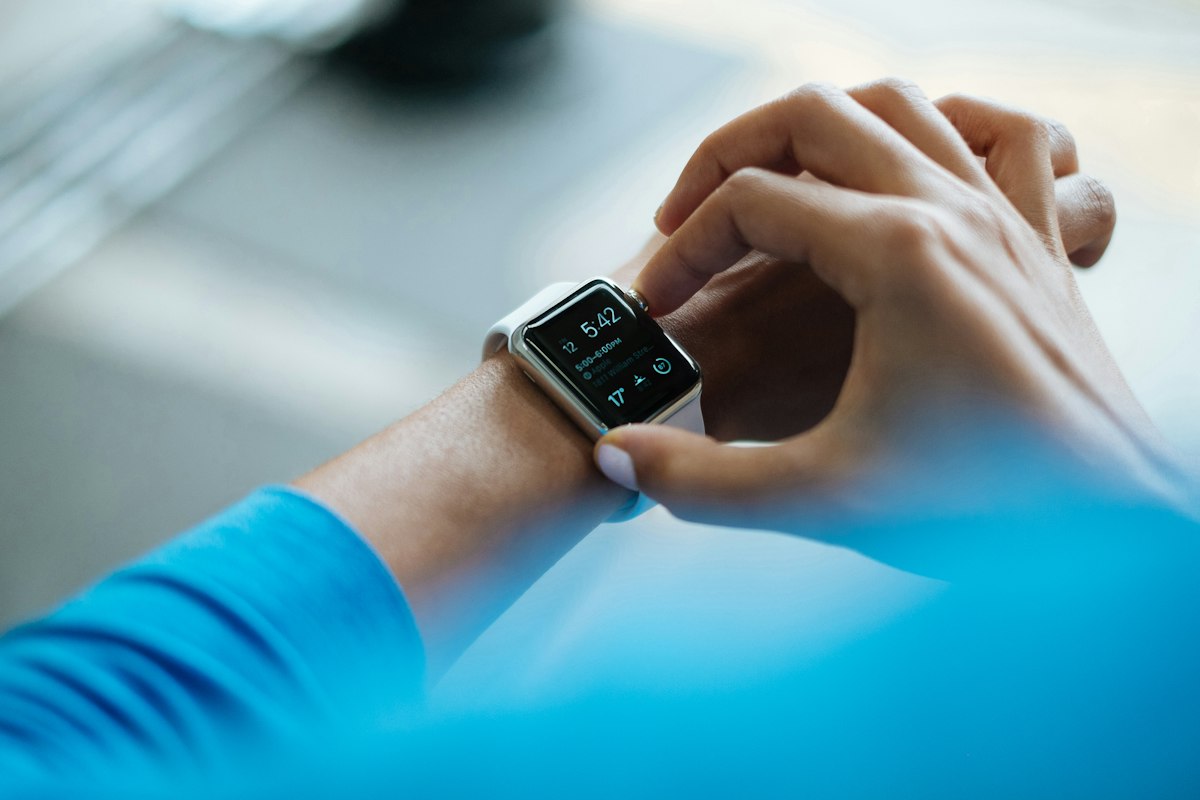

You bought the smartwatch to sleep better. You downloaded the app, strapped it on, and waited for the morning verdict. But instead of waking up refreshed, you woke up anxious — scrolling through graphs of sleep stages, fixating on a low score, and wondering what you did wrong. If that sounds familiar, you may be experiencing orthosomnia, a condition where the pursuit of perfect sleep data actually makes your sleep worse. And you are far from alone. According to a 2025 survey from the American Academy of Sleep Medicine, 76% of Americans who use sleep trackers report feeling anxious about the data their devices produce.
Sleep tracking technology has exploded in popularity. According to industry estimates, in 2023 roughly 35% of American adults used a wearable sleep tracker of some kind. By 2025, that number had climbed to an estimated 48% — nearly half the adult population wearing a device to bed every night, generating data they may not know how to interpret. The technology is impressive. The question is whether all that information is actually helping anyone sleep.
What Is Orthosomnia and Why Does It Matter?
The term orthosomnia was coined in 2017 by researchers at Rush University Medical Center and Northwestern University's Feinberg School of Medicine. They noticed a troubling pattern among patients arriving at sleep clinics: people who were convinced their sleep was terrible, not because of how they felt, but because of what their tracker told them. These patients would present with detailed spreadsheets of nightly data, insisting that their device had identified a problem — even when clinical sleep studies showed their sleep was objectively normal.
The researchers defined orthosomnia as a preoccupation with achieving perfect sleep data from consumer tracking devices, to the point where the preoccupation itself disrupts sleep. The name draws from the same root as orthorexia — the unhealthy obsession with healthy eating. In both cases, a reasonable health goal becomes counterproductive when pursued with excessive rigidity.
What started as a niche clinical observation has since become a mainstream concern. In 2025, researchers at the University of Bergen published the Bergen Orthosomnia Scale in the Journal of Clinical Sleep Medicine — the first validated psychometric tool designed to measure orthosomnia severity. The fact that the field now has a formal diagnostic instrument tells you something about how widespread the problem has become.
The Paradox: How Monitoring Sleep Can Destroy It
Sleep is one of the few biological processes that gets worse the harder you try. This is the fundamental paradox at the heart of orthosomnia, and it is the reason sleep trackers can backfire so spectacularly for certain people. It is also a blind spot in the broader sleepmaxxing movement, which encourages data-driven optimization of every sleep variable without acknowledging that the data itself can become a source of stress.
Here is how the cycle typically works. You check your sleep score in the morning and see a number you do not like — maybe a 62 out of 100, or a note that you spent too little time in deep sleep. That number sticks with you through the day. By evening, you are thinking about it. You go to bed earlier than usual, determined to improve the score. But now you are lying in a dark room, hyperaware of every sensation, wondering whether you are falling asleep fast enough. Your heart rate climbs slightly. Your mind races. You check the time. Twenty minutes pass. You check again.
The next morning, your score is worse. Of course it is — you spent the night anxious about sleeping instead of actually sleeping. This is what sleep researchers call sleep effort, and it is the single most reliable way to produce insomnia in an otherwise healthy person. The tracker did not cause a sleep disorder. It created the psychological conditions under which one could develop.
A TIME feature on orthosomnia highlighted multiple cases of patients whose clinically normal sleep deteriorated after they began tracking, precisely because the data gave them something to worry about that had not existed before. The irony is sharp: technology designed to optimize rest was producing the exact opposite outcome.
The Accuracy Problem
The anxiety might be slightly more justified if consumer sleep trackers were reliably accurate. They are not. Most wrist-worn devices estimate sleep stages using accelerometry and heart rate data — reasonable proxies, but a far cry from the electroencephalography (EEG), electromyography (EMG), and electrooculography (EOG) used in clinical polysomnography.
Research on sleep tracker accuracy consistently shows that consumer devices do a reasonable job of estimating total sleep time — usually within 15 to 30 minutes of polysomnography measurements. Where they struggle is in distinguishing sleep stages. Deep sleep and REM sleep estimates can vary by 30 to 60 minutes from clinical measurements on any given night. That means the specific stage data many people obsess over is often unreliable.
This matters because most orthosomnia anxiety centers on stage-specific metrics. People fixate on their deep sleep percentage or their REM duration, not realizing that the numbers they are agonizing over have significant margins of error. You might lose sleep worrying about a deep sleep deficit that does not actually exist.
When Sleep Trackers Actually Help
None of this means sleep trackers are useless. For many people, they provide genuine value — but the value lies in pattern recognition over weeks and months, not in obsessing over any single night's score.
Identifying long-term trends is where trackers shine. If your average sleep duration has been declining steadily over three months, that is meaningful information worth acting on. If you notice that your sleep quality consistently drops on nights after you consume alcohol, that is a useful behavioral insight. These macro-level patterns are far more reliable and actionable than nightly stage breakdowns.
Detecting snoring is another area where tracking technology provides real value. Many modern sleep and snoring apps can record nighttime audio and flag episodes of heavy snoring or breathing irregularities. Unlike sleep stage estimation, audio-based snoring detection is relatively straightforward — the microphone picks up sound, and the algorithm identifies snoring patterns. This data can serve as an early warning sign for conditions like obstructive sleep apnea and can motivate people to seek evaluation or treatment. Devices like the Apple Watch can even flag signs of sleep apnea using breathing disturbance data — a genuinely useful screening signal when paired with medical follow-up.
Building accountability around a consistent sleep schedule is perhaps the most underappreciated benefit of wearable trackers. The simple act of having a bedtime reminder and seeing your sleep-wake consistency visualized over time can reinforce the single most impactful sleep hygiene practice: going to bed and waking up at the same time every day.
When Sleep Trackers Hurt
The problems tend to emerge when people shift from using tracker data as general guidance to treating it as a definitive medical assessment. Several patterns reliably predict trouble.
Score obsession is the most common. When the first thing you do every morning is check your sleep score, and that number determines how you expect to feel for the rest of the day, the tracker has too much power over your psychology. Studies have shown that people who are told they slept poorly — regardless of how they actually slept — perform worse on cognitive tests. The belief shapes the experience.
Competitive tracking has become surprisingly common among couples and friend groups who share sleep data. Comparing scores introduces a social pressure element that has nothing to do with health. Sleep is not a competition, and individual sleep needs vary significantly. Someone who genuinely functions well on seven hours should not feel inadequate because their partner's tracker reports eight.
Behavioral rigidity develops when people reorganize their entire lives around optimizing tracker metrics. Declining social invitations because they might affect your sleep score, refusing to travel because it disrupts your data trends, or lying awake anxious because you went to bed twelve minutes later than usual — these are signs that the tool has become the problem.
The Action Gap: Data Without Direction Equals Anxiety
Here is the core issue that nobody in the wearable technology industry wants to talk about: data without a clear path to action produces anxiety, not improvement. This is the action gap, and it is where most sleep tracker users get stuck.
Your watch tells you that you scored a 58 last night. Now what? The app might suggest vague tips — reduce screen time, avoid caffeine, try relaxation techniques. These are fine as general advice, but they are not specific enough to address what actually happened. You are left with a number that feels bad and no concrete way to make it better. That combination — awareness of a problem plus helplessness to fix it — is a textbook recipe for anxiety.
The equation changes entirely when data leads to specific, actionable interventions. Data plus action equals improvement. Data minus action equals stress.
Consider the difference between these two scenarios. In the first, your tracker tells you that your sleep score is low, and you spend the next day feeling vaguely worried about it. In the second, your tracker tells you that you snored heavily for three hours last night, and you respond by addressing the snoring with a proven intervention. The first scenario produces anxiety. The second produces results.
If Your Tracker Says You Snore, Fix the Problem
Snoring is one of the few sleep issues where the path from data to action is completely clear. If your tracker or snoring recording app identifies regular snoring, you do not need to sit with that information and worry about it. You need to address it.
Heavy snoring is not just a noise problem. It indicates partial airway obstruction during sleep — the tissues in your throat are narrowing enough to vibrate with each breath. This obstruction reduces the quality of the air reaching your lungs and can fragment your sleep in ways you may not consciously notice but that your body absolutely registers. Your tracker is detecting a real issue. The appropriate response is not to agonize over the data but to do something about it.
A mandibular advancement mouthpiece works by gently repositioning the lower jaw forward, which pulls the tongue base away from the back of the throat and opens the airway. The effect is mechanical and immediate — it works the first night you use it. Unlike vague sleep hygiene suggestions, this is a direct, specific intervention that targets the exact problem your tracker identified.
This is what healthy sleep tracking looks like in practice. The device surfaces an insight. You take a concrete step. The problem improves. The next time you check your data, the snoring episodes are reduced or gone, your oxygen levels are more stable, and your sleep score reflects genuine improvement rather than wishful thinking. The tracker becomes useful precisely because you paired it with action.
How to Use Your Tracker Without Losing Sleep Over It
If you recognize yourself in the orthosomnia patterns described above, you do not necessarily need to throw away your smartwatch. But you do need to change your relationship with it. Here are practical guidelines that sleep clinicians recommend.
Check your data weekly, not daily. A single night's data is noisy and unreliable. Weekly averages smooth out the noise and reveal patterns that actually matter. Resist the urge to check your score first thing every morning.
Focus on what you can control. Your bedtime, your wake time, your caffeine cutoff, your evening routine — these are actionable levers. Your deep sleep percentage on any given night is not something you can directly control, and fixating on it serves no constructive purpose.
Trust how you feel. If you wake up feeling rested and alert, your sleep was adequate regardless of what the tracker says. Subjective sleep quality is a clinically valid measure. Do not let a device override your own experience.
Act on what the data reveals. If your tracker identifies snoring, address it with a proven mouthpiece. If it shows you are consistently getting less than six hours, restructure your schedule. If it reveals that alcohol disrupts your sleep, adjust your habits. The value of data lives entirely in the actions it enables.
Set a tracker-free trial period. If you suspect your device is making things worse, take it off for two weeks. Track nothing. See how you feel. Many people are surprised to find they sleep better without the nightly performance evaluation.
The Bottom Line on Orthosomnia
Sleep trackers are tools, and like all tools, their value depends entirely on how you use them. For people who check trends periodically and act on meaningful signals — like detected snoring or a shrinking sleep window — they can be genuinely useful. For people who obsess over nightly scores and reorganize their lives around metrics they cannot directly control, they can become a source of the very problem they were meant to solve.
Orthosomnia is real, it is growing, and it reflects a broader cultural tendency to believe that more data automatically leads to better outcomes. Sometimes it does. Sometimes it just gives you something new to worry about at 2 a.m.
If your tracker has surfaced something actionable — particularly snoring — the best thing you can do is stop staring at the graphs and start addressing the underlying cause. A well-designed anti-snoring mouthpiece gives your tracker data a purpose. It turns a worrying number into a solved problem. And that is the difference between data that keeps you up at night and data that actually helps you sleep.
Your Tracker Detected Snoring — Now Fix It
The Snorple mouthpiece uses dual MAD + TSD technology to open your airway from night one. Clinically proven to reduce snoring. 100-night money-back guarantee. Turn your sleep data into real results.
Stop the Snoring — $59.95 →Recommended Reading
- How Accurate Are Sleep Trackers? — What consumer devices get right and wrong
- Anti-Snoring Apps Review — The best apps for detecting and recording snoring
- Sleep Quality vs. Quantity — Why hours in bed are only part of the picture
- Sleep Hygiene Complete Guide — Evidence-based habits for better rest
- Sleepmaxxing in 2026 — What the viral sleep optimization trend gets right and wrong
- Apple Watch Sleep Apnea Detection — What that notification actually means